
Facilitator / Trainer / Mentor
Facilitating

Over the years, whilst taking on a wide range of facilitating, training and mentoring roles, I have evolved some guiding principles that underpin my approach.
These are that:
- Questions are more important than answers – so focus on finding and articulating the underlying questions
- Hearing is more important than listening – so try and also hear what is not being said
- Reflection is as important as action – so give yourself and others time to find the ‘still place’ from where new ideas / imagination / vision / clarity can emerge
- The seeds of the solution are always present in the situation – so try to build on what is there not on what you assume ought to be there or what you believe ought to happen next
- Things change constantly – yesterday’s truth is tomorrow’s assumption so whatever you think you know is only likely to be true at the moment you think you know it
- The only power you ever have is the power you are willing to give away in order to empower others
- Real success is when no one notices what you have done – so plan to walk through your work without leaving footprints
Training
I no longer work actively as a trainer – but since I have done so much training it feels appropriate to share something of my training approach. In fact, I never thought I would ever be a teacher or a trainer – beyond a brief period in my life when I taught drama and theatre studies, and to suggest that I have developed anything as grand as a ‘training philosophy’ is rather presumptuous, but I do realise that over the years I have evolved a style of training and a number of training practices that seem to be increasingly coherent – a kind of dance between ‘art’ and ‘science’. At least, it seems coherent enough to try and share it – but largely to encourage others to create their own ‘training philosophy’ rather than to adopt mine.
There are, of course, many ways to train and the options one selects will depend on the learning purpose.
| Learning purpose | Description | Training options |
|---|---|---|
| Knowledge acquisition | Learning facts / figures / history | * Lectures; * Written materials; * Internet |
| Skills development | Enhancing / building new professional competencies | * 1-1 or small group training; * Practice-based / supervised work; * Skills swaps |
| Increased empathy / insight | Understanding situations ‘from within’ | * Action research; * Internships; * Study visits |
| Behaviour modification | Transforming operational style | * Being ‘coached’ or ‘mentored’; * Job swaps; * Role playing |
| Visioning | Developing imaginative capacity / originality in planning for the future | * Creative workshops (eg story-telling, painting, drama); * Inspirational events; * Futures / search workshops |
| Building working relationships | Strengthening creative collaboration (eg between teams / networks / partners) | * Facilitated workshops; * Secondments; * E-moderated learning |
As a trainer, it is useful to be able to tailor sessions to suit different groups and purposes. It is also great to incorporate many different types of learning into the same training course. Wherever possible (and before the Covid-19 pandemic made this impossible) I took groups into situations, projects, environments where they came face-to-face with issues that are better understood through direct experience rather than by third party description.
The psychologist John Heron has written well about how we know what we know and I have found his work inspirational over many decades. He explores three basic types of knowledge:
- Experiential (drawing from direct experience)
- Propositional (working from ideas and concepts)
- Practice-based (knowing from doing)
To which I think we can add as a fourth and a fifth:
- Cultural (values-based knowledge linked to your ‘community’)
- Intuitive – see Using Our Senses (link)
I believe that the single most important thing in training or working with others is to be prepared for the unexpected…
Effective training is far less to do with what the trainer says or knows and far more to do with who the trainer is and how he / she behaves. By which I mean that trainers are only as good as their deeds, not their words. How far does any trainer role model what they claim to be important?
Above all, good training is about transformation – finding the ‘tipping points’ as Malcolm Gladwell explores so vividly in his best-selling book.
” In the end, Tipping Points are the reaffirmation of the potential for change and the power of intelligent action. Look at the world around you. It may seem like an immovable, implacable place. It is not. With the slightest push – in just the right place – it can be tipped”
From THE TIPPING POINT, Malcolm Gladwell, 2000, Abacus
Training
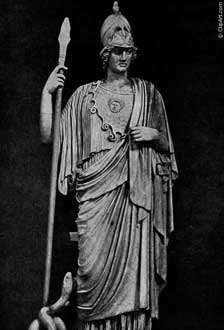
One of the things I love about mentoring is the story that inspired the role. Remarkably few people know the origin of the word (only one has ever been able to tell me the correct answer when I have asked more than 500 partnership broker trainees the question!).
The term ‘mentor’ comes from the name of an important figure in the life of Odysseus in Greek mythology. Mentor was asked by Odysseus to have oversight of his young son, Telemachus, whilst he was away fighting the Trojan War (from which he did not return for 10 years).
Odysseus himself was a protégée of Athena (Goddess of Wisdom) and she guided Mentor to take on his ‘in loco parentis’ role with great care, insight and dedication. For this reason the personal name Mentor has been adopted as a term meaning someone who imparts wisdom and shares knowledge with a less experienced person.
Having said that, it feels a little presumptuous to assume one has anything to impart to others – and I am often quite overawed by the capacity others have for courage and creativity in the face of daunting challenges in ways that make me wonder whether I should ever apply the term ‘mentor’ to myself. On the other hand, what can one usefully do with such a wealth of experiences over so many years other than try one’s best to support others just starting out on their journey.
And I suppose I have mentored (informally) for much of my life so what is now proposed is to do so more formally and with more consciousness and discipline.
In any event, I always liked myths and legends, so it feels good to be an echo (however small) of the Odyssey – an extraordinary journey by any standards!